
Key Takeaways
- •Hormonal acne is driven primarily by androgens (testosterone, DHT) and the skin's sensitivity to them — not by topical factors alone.
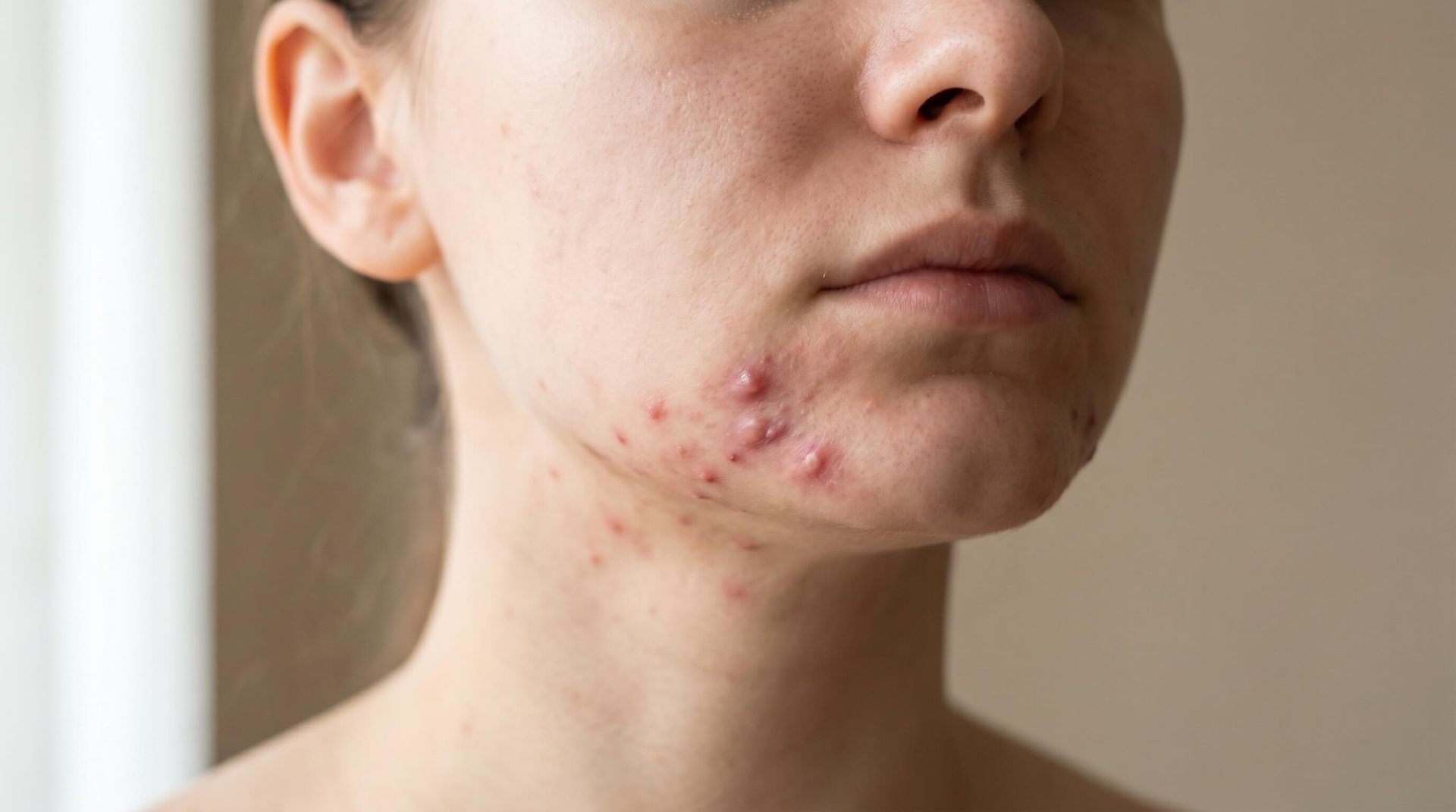
- •It typically clusters on the lower face: jawline, chin, and around the mouth, often appearing as deep, painful cysts.
- •Most cases flare 7–10 days before menstruation when progesterone is high and estrogen drops.
- •Topical retinoids and niacinamide help, but moderate-to-severe hormonal acne usually requires a prescription approach.
- •Spironolactone, combined oral contraceptives, and isotretinoin are the three most evidence-backed prescription routes.
- •Diet matters at the margins — low-glycemic eating and reduced dairy intake show modest but real effects in clinical studies.
Why Hormonal Acne Behaves Differently
All acne is, in some sense, hormonally influenced — sebum production is driven by androgens at any age. But 'hormonal acne' as a clinical category refers specifically to acne that flares in cyclical patterns tied to hormonal shifts and resists the standard topical playbook. It's the breakouts that arrive like clockwork before your period, the deep painful cysts on your jawline that take weeks to resolve, and the persistent chin breakouts that benzoyl peroxide barely touches.
The mechanism is rooted in androgen sensitivity at the sebaceous gland. Testosterone is converted within the gland to dihydrotestosterone (DHT) by the enzyme 5-alpha reductase. DHT then binds to androgen receptors and stimulates increased sebum production. People with hormonal acne don't necessarily have abnormal blood hormone levels — they often have normal levels but unusually sensitive receptors, which is why blood tests for hormones often come back within range despite obvious skin symptoms.
This receptor sensitivity also explains why hormonal acne tends to localize to the lower third of the face. The sebaceous glands of the chin, jawline, and perioral area have a higher density of androgen receptors than the rest of the face, making them disproportionately reactive to even small hormonal fluctuations.
The Menstrual Cycle Connection
In the week before menstruation, estrogen drops and progesterone peaks. Progesterone has a mild androgenic effect, and the relative shift toward androgen dominance is what triggers the classic premenstrual flare. Studies tracking acne lesion counts across the cycle consistently show a measurable spike beginning 7-10 days before menstruation and resolving by mid-cycle.
PCOS (polycystic ovary syndrome) deserves a specific mention because it's underdiagnosed and a common driver of severe adult hormonal acne. If your acne is accompanied by irregular periods, hirsutism (unwanted facial or body hair growth), scalp hair thinning, or insulin resistance symptoms, push for a proper hormonal workup including LH, FSH, free testosterone, DHEA-S, and a pelvic ultrasound.
Perimenopause brings its own hormonal volatility, with declining estrogen creating a relative androgen excess that can cause adult-onset hormonal acne in women who never had bad skin in their youth. This is one of the most underrecognized presentations and frequently gets misdiagnosed as rosacea or perioral dermatitis.
Topical Treatments That Actually Help
While topical alone rarely clears moderate-to-severe hormonal acne, the right baseline routine reduces inflammation, prevents new lesions, and dramatically shortens the lifespan of the breakouts you do get. The foundation is a topical retinoid (adapalene or tretinoin) used nightly to normalize keratinization and prevent comedone formation.
Niacinamide is the most useful supportive ingredient. At 4-10% concentrations, it reduces sebum production, calms inflammation, and helps fade post-inflammatory marks left behind by hormonal cysts. The Ordinary Niacinamide 10% + Zinc is the most accessible high-percentage option and pairs well with retinoid therapy when applied in the morning.
For active flares, benzoyl peroxide remains the most reliable spot-treatment ingredient because it kills C. acnes bacteria without driving resistance. La Roche-Posay Effaclar Duo combines 5.5% benzoyl peroxide with LHA and niacinamide in a base gentle enough to use across the whole U-zone, not just on individual lesions. Use it once daily and expect dramatic improvement in the inflammatory component within four weeks.
When You Need a Prescription
If 12 weeks of consistent topical therapy hasn't substantially reduced your hormonal flares, it's time to consider systemic treatment. For women with hormonal acne, spironolactone is often transformative. It's a potassium-sparing diuretic with anti-androgenic properties — it blocks androgen receptors in the skin, reducing sebum production at the source. Studies show 60-85% improvement in women treated with 50-200mg daily. Most people see meaningful results within 8-12 weeks.
Combined oral contraceptives containing anti-androgenic progestins (drospirenone, cyproterone acetate) are another well-evidenced option. The FDA has approved several specifically for acne treatment. They reduce ovarian androgen production and increase sex hormone-binding globulin, which lowers the amount of free testosterone available to stimulate sebaceous glands.
For severe, scarring, or treatment-resistant hormonal acne, isotretinoin (Accutane) remains the only treatment that produces long-term remission in the majority of patients. It permanently shrinks sebaceous glands, dramatically reduces sebum production, and addresses every pathogenic factor in acne simultaneously. It requires close dermatologist monitoring and strict pregnancy prevention, but for the right candidate it's life-changing.
The Diet Question
Diet and acne is a contentious topic, but the evidence has firmed up considerably over the past decade. Two dietary patterns show consistent associations with acne severity: high-glycemic eating (refined carbohydrates, sugar, processed foods) and dairy intake — particularly skim milk.
High-glycemic foods spike insulin and IGF-1, both of which directly stimulate androgen production and sebaceous gland activity. A randomized controlled trial by Smith et al. demonstrated that a low-glycemic-load diet over 12 weeks significantly reduced acne lesion counts compared to a conventional Western diet. The effect was modest but statistically significant.
Spearmint tea has emerged as a low-cost, evidence-backed dietary intervention specifically for hormonal acne in women. Two cups daily of spearmint tea has been shown in small randomized studies to reduce free and total testosterone levels and meaningfully decrease inflammatory acne lesion counts over a 30-day period. It's not a replacement for medical treatment, but as an adjunct it's cheap, well-tolerated, and worth trying.
What Doesn't Work (And What to Stop Doing)
Aggressive over-cleansing, alcohol-based toners, and constantly rotating spot treatments make hormonal acne worse, not better. The deep cysts characteristic of hormonal acne are inflammatory events that originate well below the skin surface — no surface treatment can reach them, and stripping the skin barrier only adds inflammation to the system that's already struggling.
Picking and squeezing hormonal cysts is particularly destructive. Unlike a typical whitehead, hormonal cysts often have no discrete pus pocket to express. Trying to squeeze them ruptures the cyst wall internally, spreads inflammation to surrounding tissue, and dramatically increases the risk of permanent scarring or post-inflammatory hyperpigmentation that lasts months.
Equally counterproductive is using a different acne product every week because the last one 'didn't work.' Hormonal acne responds slowly because it's a systemic problem with skin manifestations. Pick a sensible routine, give it 12 weeks to show results, and if topicals alone aren't enough, escalate to a dermatologist for a prescription approach rather than buying a sixteenth serum.
References
- Zaenglein AL, et al. "Guidelines of care for the management of acne vulgaris." Journal of the American Academy of Dermatology. 2016;74(5):945-973.
- Smith RN, et al. "The effect of a high-protein, low glycemic-load diet versus a conventional, high glycemic-load diet on biochemical parameters associated with acne vulgaris." Journal of the American Academy of Dermatology. 2007;57(2):247-256.
- Akdoğan N, et al. "Spearmint herbal tea has significant anti-androgen effects in polycystic ovarian syndrome." Phytotherapy Research. 2010;24(2):186-188.
- Layton AM, et al. "Spironolactone for adult female acne." British Journal of Dermatology. 2017;177(1):260-261.


