
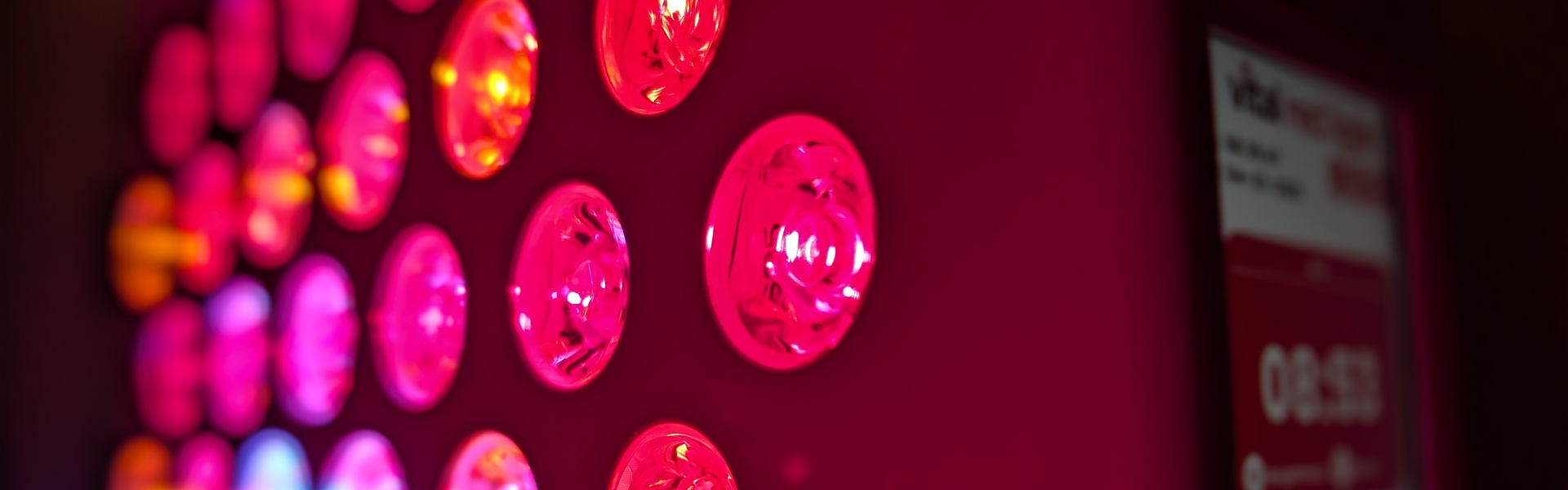
Red light therapy has graduated from clinical curiosity to a mainstream wellness category. This dermatology-grade guide breaks down how it works, which wavelengths matter, what to look for in a panel, and how to build a routine that actually delivers results.
Red light therapy has moved out of professional dermatology offices and recovery clinics and into millions of bedrooms, bathrooms, and home gyms. The reason is simple: the same wavelengths that practitioners have used for decades to support skin, soft tissue, and circulation are now available in panels you can mount on a door, set on a tabletop, or hang on a wall.
Not every device delivers, though. The marketing around red light is messy. Output ratings get exaggerated, "near infrared" gets used to mean almost anything, and customers often pay too much for too little, or too little for a device that simply does not produce a therapeutic dose.
This guide breaks down what red light therapy actually is, how it works at the cellular level, which wavelengths matter for which goals, and how to choose a panel that earns its place in your routine. By the end, you will know exactly what to look for, what to ignore, and where to start if you want a serious at-home setup.
What Red Light Therapy Actually Is
Red light therapy is the topical application of specific wavelengths of red and near-infrared light to the skin and underlying tissues. In the clinical literature, the practice goes by a more precise name: photobiomodulation, often abbreviated as PBM or LLLT (low-level light therapy).
Unlike sunlight, red light therapy panels emit no UVA, no UVB, and no high-intensity blue light at the levels that would damage tissue. They produce narrow bands of light, typically in the 600 to 1100 nanometer range, that the body absorbs and uses for cellular repair and signaling.
The practice has been studied in over five hundred human trials and several thousand laboratory studies. Outcomes investigated include skin texture and tone, fine line reduction, post-exercise muscle recovery, joint comfort, hair follicle support, sleep quality, and inflammation modulation. The science is no longer fringe. It is mainstream enough that the FDA has cleared various devices for specific dermatological and pain indications.
The Cellular Mechanism: Why Photons Do Anything at All
The short version: red and near-infrared photons get absorbed by a molecule called cytochrome c oxidase inside the mitochondria of your cells. Mitochondria are the energy producers of every cell in your body. When cytochrome c oxidase absorbs photons in the right wavelength range, it boosts the rate at which the mitochondrion produces ATP, the universal energy currency of human biology.
More ATP means cells have more available energy for whatever they are trying to do. Skin fibroblasts make more collagen. Muscle satellite cells repair faster. Endothelial cells signal for better local circulation. Inflammatory pathways downregulate. None of this is magic. It is the natural downstream effect of giving cells more energetic headroom to perform their normal jobs.
That mechanism explains why red light is so versatile. It does not target one specific condition. It supports a fundamental cellular process that happens to be involved in nearly every healing and regeneration pathway in the body.
The Wavelengths That Matter
Most marketing focuses on two numbers, and rightly so. They are the workhorses of every credible panel.
660 nanometers (red). This wavelength penetrates roughly 5 millimeters into tissue. It is absorbed almost entirely by the skin and the layers immediately beneath. It is the wavelength most associated with collagen production, fibroblast activity, wound support, and surface-level skin appearance. If you care about how your face, neck, chest, or hands look in the mirror, 660nm is the wavelength doing most of the work.
850 nanometers (near infrared). NIR penetrates much deeper, often two to three centimeters or more depending on tissue type. It reaches muscles, joints, connective tissue, and even superficial bone. This is the wavelength athletes care about. It is also the wavelength most studied for inflammation reduction, joint comfort, and post-exercise recovery.
A quality panel will run both simultaneously, or let you toggle between them.
The next tier of premium panels adds more wavelengths to the mix. These are not gimmicks if implemented correctly:
480nm (blue): antibacterial, used clinically for acne, targets P. acnes bacteria at the surface. 590nm (yellow): studied for circulation, skin tone, and texture support. 630nm (red): a second red wavelength with slightly different absorption characteristics than 660nm. 670nm (red): the wavelength with some of the most extensive research behind it for retinal health, mitochondrial function, and general cellular support. 810nm and 830nm (NIR): additional NIR wavelengths with strong literature behind them for brain photobiomodulation and joint support. 1060nm (deep NIR): a newer addition associated with fat metabolism and cognitive support research.
Devices that include nine wavelengths do more than sound impressive on a spec sheet. They allow you to target multiple goals (skin, recovery, mood, brain function) without buying separate devices.
How Deep Each Wavelength Reaches
This is what is actually happening when light enters the body. Different wavelengths travel different distances and do different jobs at each depth.
Penetration depths reflect the consensus range from peer-reviewed photobiomodulation literature. Actual depth varies by tissue type, irradiance, and individual physiology. Visible wavelengths shown in their true color; near-infrared shown as violet-purple for visualization purposes. Vertical scale is non-linear to preserve readability of surface layers.
| Wavelength | Type | Penetration depth | Category | Primary use |
|---|---|---|---|---|
| 480nm | Blue | ~1mm | Surface | Targets P. acnes bacteria. Used clinically for acne and surface inflammation. |
| 590nm | Yellow | ~2mm | Surface | Supports circulation, skin tone, and surface texture. |
| 630nm | Red | ~3mm | Mid-tissue | Stimulates fibroblast activity. Surface skin rejuvenation. |
| 660nm | Red | ~5mm | Mid-tissue | The workhorse skin wavelength. Collagen synthesis, wound support, fine line reduction. |
| 670nm | Red | ~6mm | Mid-tissue | Among the most-studied wavelengths for mitochondrial function and cellular ATP production. |
| 810nm | Near-infrared (invisible) | ~25mm | Deep tissue | Reaches muscle and connective tissue. Studied for recovery and brain photobiomodulation. |
| 830nm | Near-infrared (invisible) | ~35mm | Deep tissue | Strong literature for joint comfort and deep tissue recovery. |
| 850nm | Near-infrared (invisible) | ~45mm | Deep tissue | The deepest-penetrating standard NIR wavelength. Inflammation modulation and joint support. |
| 1060nm | Near-infrared (invisible) | ~52mm | Deep tissue | Newer addition. Research focus on fat metabolism and cognitive function. |
Why Panels Beat Other Form Factors
Red light therapy comes in many forms: masks, handheld wands, helmets, beds, mats, bulbs, and panels. They are not interchangeable.
Masks are excellent for facial skin protocols. They are convenient, hands-free, and deliver consistent dose to the face. The tradeoff is coverage. They cannot treat your back, your knees, your shoulders, or anything below the chin.
Handheld wands are good for spot treatment. They work for small acne flare-ups, a sore elbow, or targeted scar tissue. They are slow if you want to cover any meaningful area.
Beds deliver the most coverage. They are also the most expensive, often five figures, and require dedicated floor space and professional installation in most cases.
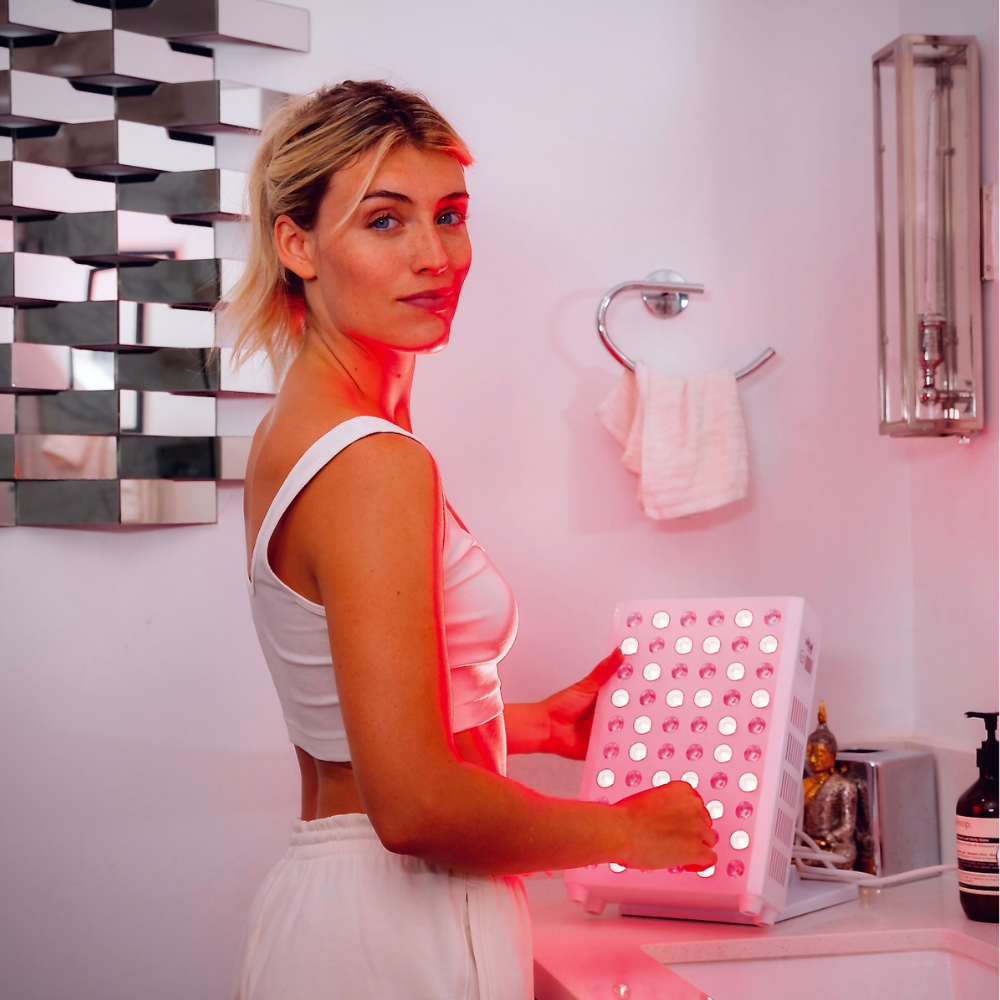
Panels are the sweet spot for serious at-home users. A mid-sized panel can treat your full torso, legs, or back in ten minutes. A larger panel can do your entire body. They mount on doors, sit on stands, or hang on walls. They scale with your goals: start with one, add another later if you want bilateral coverage.
If you are committed to making red light therapy a daily ritual rather than an occasional indulgence, a panel is almost always the right answer.
Ready to invest in a clinical-grade panel?
Vital Red Light's lineup ships with third-party spectral testing, a 30-day money-back guarantee, and a 3-year warranty.
Shop Vital Red Light PanelsWhat to Look For in a Panel
Five specifications separate a serious therapeutic device from an expensive nightlight.
Irradiance. Measured in milliwatts per square centimeter, irradiance is the actual power delivered to your skin at a given distance. Anything below 50 mW/cm² at six inches will struggle to produce a clinical dose in a reasonable time. Quality panels deliver 100 mW/cm² or more at the recommended treatment distance.
Wavelength accuracy. Cheap panels often advertise "660nm" but actually emit a smear of wavelengths centered somewhere nearby. Look for brands that publish third-party spectral testing showing tight peaks at the claimed wavelengths.
EMF output. Electromagnetic field emissions vary widely between brands. The best panels emit essentially zero EMF at treatment distance. Cheap panels can leak substantial EMF from their drivers and fans. If you plan to spend ten or twenty minutes inches from the device, this matters.
Build quality and lifespan. LED panels rated for 50,000 to 100,000 hours of operation will last a decade or more under normal home use. Cheaper panels degrade fast and lose intensity within a year or two.
Warranty and return policy. A three-year warranty and a 30-day return window are reasonable benchmarks. Brands that offer less are often hiding something.

Use Cases Where Panels Earn Their Place
The benefits cluster into a few categories, each backed by published research.
Skin. Increased collagen and elastin synthesis, reduced fine lines, improved texture, support for active acne (especially with a blue light option), and faster healing of minor wounds and post-procedure recovery.
Recovery and performance. Reduced delayed-onset muscle soreness, faster strength recovery between sessions, joint comfort, and improved circulation to working tissue.
Sleep and circadian support. Morning red light exposure helps anchor circadian rhythm in people who do not get enough natural sunlight. Evening sessions are calming for many users.
Inflammation. Modulation of inflammatory cytokines, particularly relevant for the chronic low-grade inflammation associated with sedentary lifestyles, poor sleep, and stress.
Hair. Support for follicle activity in early-stage androgenic alopecia, with red wavelengths being the primary driver. If you specifically want to target the scalp, a panel is not the most convenient form factor — angling a stationary panel at the top of your head for 15 minutes a day gets old fast. A wearable like the Artemis LED Crown is purpose-built for this use case: it sits on your head hands-free, combines LEDs with low-level laser diodes for deeper follicle penetration, and lets you walk around or work during a session. If hair is your primary goal, it is a more practical pick than a panel.
Dosing and Distance: The Boring Part That Matters Most
Most users get one of two things wrong: too little, or too much.
The standard protocol for a quality panel is 10 to 20 minutes per area, at a distance of 6 to 24 inches, three to five times per week. Closer distances increase intensity but reduce coverage. Farther distances do the opposite.
There is a real phenomenon called the biphasic dose response. Below a threshold, you get no effect. Within the therapeutic window, you get benefit. Above the upper threshold, benefit drops back toward zero. More is not better past the optimal dose. This is one of the few areas of wellness where doing more actively works against you.
Start with the manufacturer's recommended distance and time. Be consistent for four to six weeks before evaluating results. Skin changes show up first, often within two to three weeks. Joint and recovery effects show up faster, sometimes within a few sessions. Hair changes take three to six months.
Building a Routine That Sticks
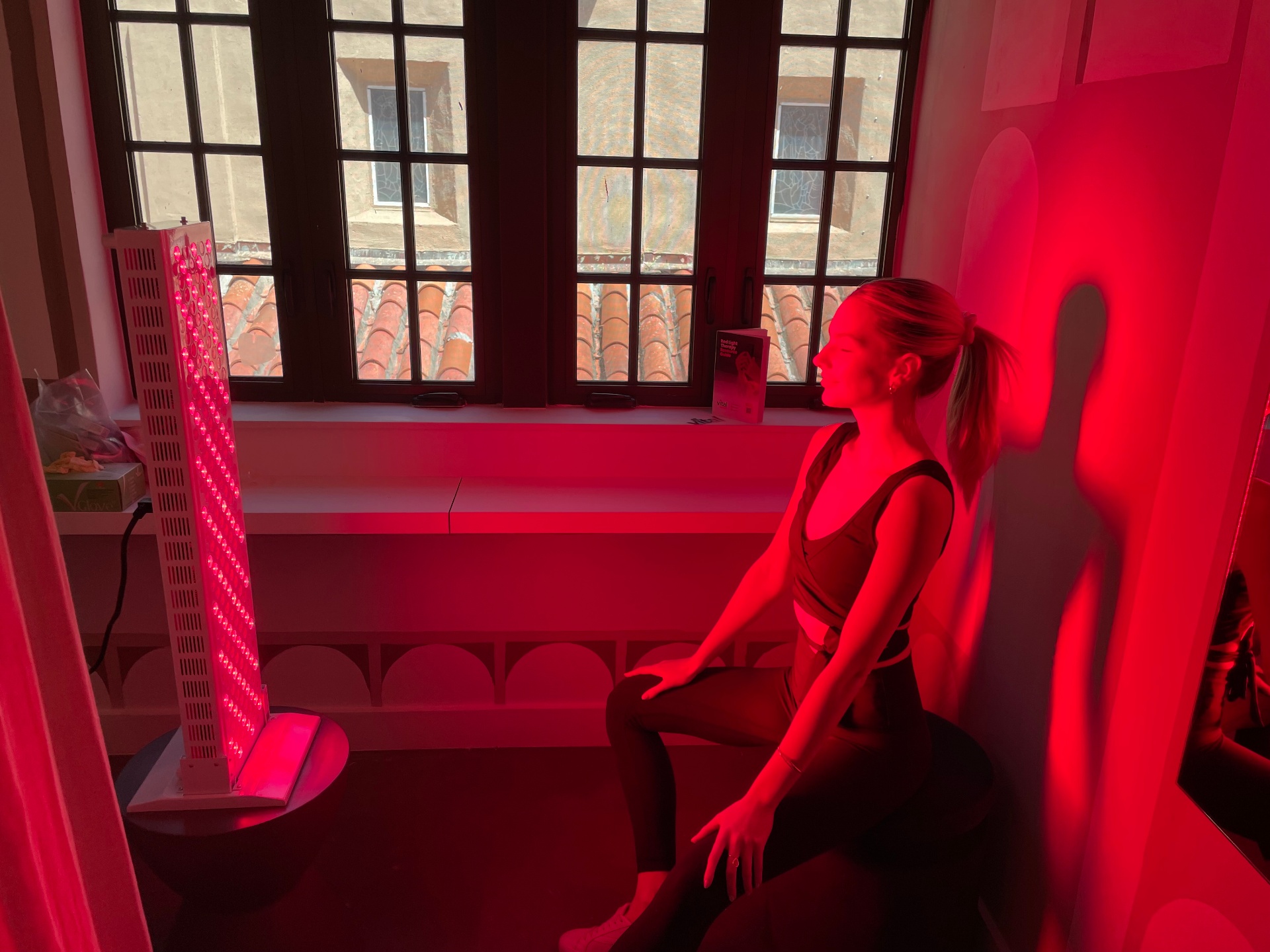
The best panel is the one you actually use. Place it somewhere you already spend time. Many people set up a panel near a desk for morning work, in front of a stretching mat for post-workout sessions, or near the bathroom mirror for an evening skin routine.
Consistency beats intensity. Five focused sessions of ten minutes each week will outperform two heroic 45-minute sessions every time.
A Specific Recommendation: The Vital Red Light Lineup
If you have read this far, you are likely ready to invest in a real device rather than another underpowered Amazon panel that will end up in a closet.
Vital Red Light is one of the brands we consistently recommend. Their lineup spans most use cases:
Vital Charge. A portable panel with a four-hour battery, ideal for travel and small-space users.
Vital Pro 2.0. A tabletop panel with nine wavelengths (480, 590, 630, 660, 670, 810, 830, 850, 1060nm), a touchscreen interface, and a preset program library. This is the most versatile single-panel option for someone who wants both skin and recovery benefits in one device.
Vital Elite 2.0. A full-body panel with the same nine-wavelength technology in a larger format. This is the right answer if you want to treat your entire body in one session.
All Vital devices are third-party tested, FDA-registered, ship with a 30-day money-back guarantee, and carry a three-year warranty. The lifespan rating on the LEDs is up to 100,000 hours, meaning even daily use will not exhaust the device for many years.
You can browse the full lineup and compare specs here: Shop Vital Red Light Panels.
Mistakes to Avoid
A few recurring errors separate people who get results from people who give up.
Buying a panel with insufficient irradiance and concluding "red light does not work."
Standing too far away to save time, which drops you below the therapeutic threshold.
Skipping eye protection during NIR sessions. NIR is invisible but still affects retinal tissue at close range.
Inconsistent use. Three sessions in week one, none in weeks two through five.
Layering thick cosmetics, makeup, or oils on the skin during sessions. These can block or scatter the light.
For Salons, Spas, and Clinics: Stepping Up to a Bed
Everything above is written for at-home users. If you operate a salon, medspa, recovery studio, or wellness clinic, the economics shift entirely. Your clients are paying for a premium experience, full-body coverage in a single session, and the kind of immersive treatment a wall-mounted panel cannot deliver.
This is where a dedicated red light therapy bed earns its place on your service menu. A bed treats the entire body simultaneously, runs on programmable timers, and produces the kind of visible, repeatable results that justify a recurring package or membership tier. For most service businesses, a single bed pays for itself within months once it is added to an existing facial, recovery, or wellness program.
The Vital Bed is built specifically for this commercial use case. It carries the same nine-wavelength technology as the Pro and Elite panels (480, 590, 630, 660, 670, 810, 830, 850, 1060nm), full-body LED coverage, programmable session presets, and a build rated for high-volume daily use. Lifespan, warranty, and third-party spectral testing are aligned with the rest of the Vital lineup.
For Professionals
Add red light therapy to your service menu.
Full-body coverage, programmable sessions, and clinical-grade specs designed for salon, spa, and clinic use.
Explore the Vital BedFrequently Asked Questions
Is red light therapy safe daily?
For most users, yes. Daily 10 to 20 minute sessions per area are well within the established safety envelope.
Can I use it during pregnancy?
Studies have not flagged safety issues, but consult your physician before starting any new therapy during pregnancy.
Will it help with rosacea or eczema?
The clinical literature is supportive but mixed. Start at lower exposure and increase gradually. Track results.
Does it interact with retinoids or acids?
No direct interaction, but skin can be more sensitive during active retinoid use. Reduce session length if irritation appears.
Does it work through clothing?
No. Both red and NIR wavelengths are blocked or scattered by most fabrics. Treat bare skin for results.
Is red light therapy the same as a tanning bed?
No. Tanning beds use UV light, which damages DNA and accelerates skin aging. Red light therapy uses non-UV wavelengths and has the opposite effect on skin.
The Bottom Line
Red light therapy is one of the few wellness categories that has graduated from experimental to mainstream while keeping its scientific credibility. The mechanism is established, the dosing guidelines are clear, and the technology has matured to the point where serious clinical-grade panels are available for home use at a fraction of the price of a single year of clinic visits.
If you are going to invest in a panel, invest in one that has the wavelength accuracy, irradiance, EMF profile, and build quality to deliver actual results. Cheap panels are not a bargain. They are a slow path to disappointment.
Start with the wavelengths that match your goals, set up a routine you can maintain, and stay consistent for at least six weeks before judging the results. The biology takes time. The work you put in pays compounding dividends in skin, recovery, and overall vitality.
Explore the full Vital Red Light lineup here.
Editor's Picks

Red Light Therapy for Anti-Aging: What Dermatologists Actually Think
June 9, 2025
How Collagen Loss Actually Works and How to Slow It Down
March 17, 2025
What Happens to Your Skin During a Professional Facial (And Is It Worth It)
May 5, 2025
For an in-depth LED mask resource, visit our companion hub at ledmask.schoolofdermatology.com.