Key Takeaways
- •Stretch marks (striae) are scars caused by tearing of the dermal collagen matrix during rapid skin stretching.
- •Red/purple striae (rubrae) are early-stage and most responsive to treatment; white striae (albae) are mature and harder to fade.
- •Topical treatments at best soften the appearance — they cannot eliminate stretch marks entirely.
- •Tretinoin and bio-oil-style formulations show modest evidence for early striae rubrae.
- •Microneedling and fractional laser are the most evidence-backed in-office treatments.
- •Genetics, hormones, and rate-of-stretching matter more than skincare in determining who develops them.
What Stretch Marks Actually Are
Stretch marks (striae distensae) are a form of dermal scarring that develops when the skin is stretched faster than its elastin and collagen network can adapt. The fibers literally tear, and the body's repair response — fibroblast activity, altered collagen deposition, vascular dilation — creates the characteristic linear bands you see on the skin's surface.
Despite appearing as surface marks, the actual injury is in the deeper dermis. The epidermis stretches and recovers reasonably well, but the underlying collagen and elastin scaffolding is permanently restructured. This is why stretch marks behave like scars rather than pigmentation issues — they have an altered surface texture, distinct margins, and respond to treatments that target dermal remodeling rather than surface concerns.
Stretch marks affect 50-90% of women during pregnancy, 70% of adolescent girls, and 40% of adolescent boys during growth spurts. They're also common in bodybuilders, people who experience rapid weight changes, and patients on prolonged corticosteroid therapy. The distribution depends on where the stretching occurs: abdomen, breasts, thighs, hips, and shoulders are most common.
Why Some People Get Them and Others Don't
Genetic factors are the strongest predictor of stretch mark development. If your mother or grandmother had significant striae from pregnancy, your risk is dramatically elevated regardless of how diligently you moisturize. Twin studies have repeatedly demonstrated heritability of striae susceptibility, with specific genetic variants in elastin and collagen pathways implicated.
Hormonal factors play a major role too. Cortisol, the body's stress hormone, weakens elastic fibers in the dermis — which is why stretch marks are common during pregnancy (cortisol rises) and adolescence (cortisol fluctuates with growth) and why long-term oral or topical corticosteroid use causes characteristic 'steroid striae.' Estrogen and relaxin during pregnancy also alter connective tissue elasticity.
The rate of stretching matters far more than the absolute amount. Slow weight changes rarely cause stretch marks even with significant total change, while rapid pregnancy growth or fast muscle gain almost always produces them. This is why interventions focused on gradual, controlled change tend to reduce risk more than any topical product.
Red vs White: The Two Stages
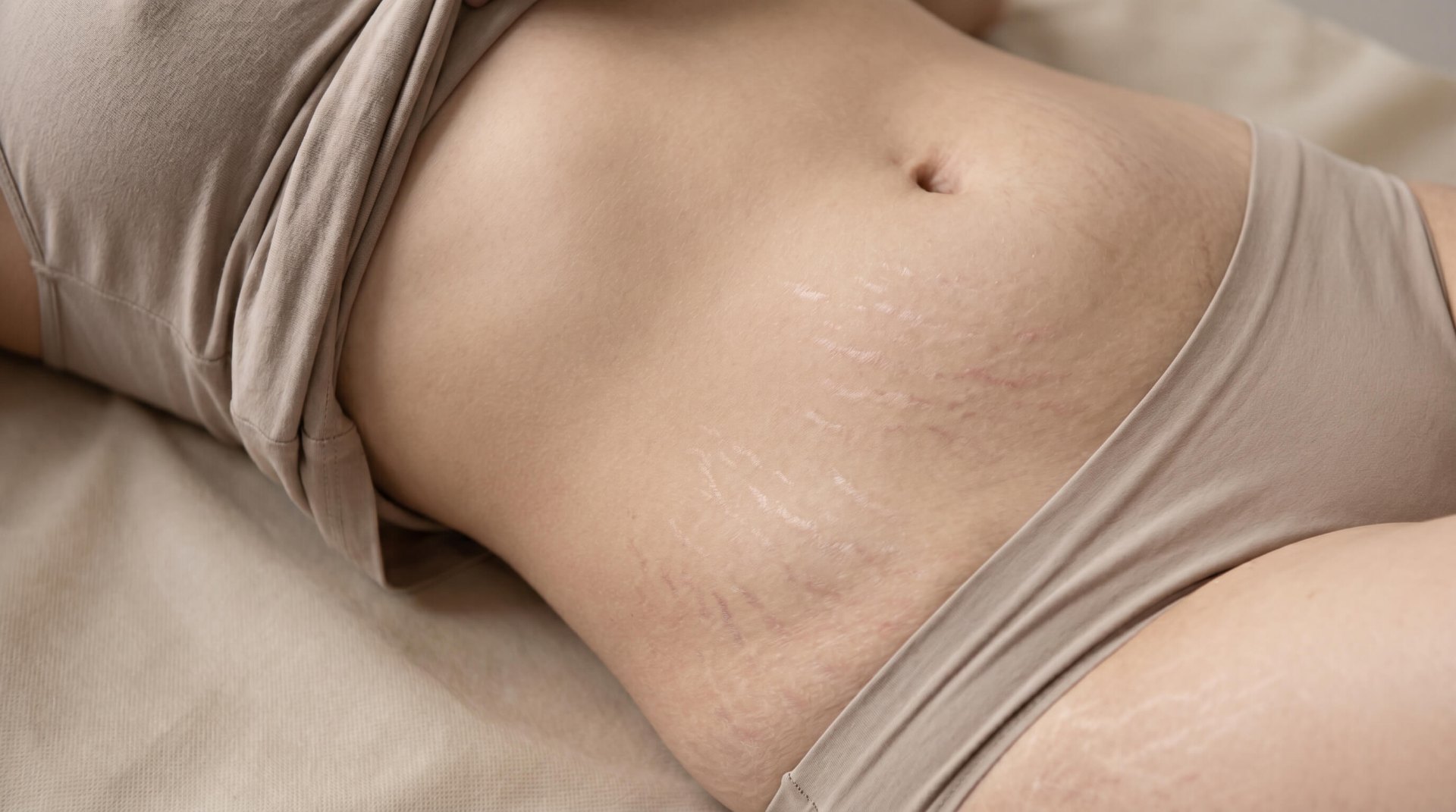
Stretch marks evolve through two clinically distinct stages. Striae rubrae are the early, active phase — they appear pink, red, or purple and may feel slightly raised. They itch in some people and reflect ongoing inflammation and increased vascularity in the dermis. This is the stage where treatment is most effective, because the tissue is still actively remodeling.
Over 6-18 months, striae mature into striae albae — pearly white, slightly depressed, atrophic bands. The vascular component fades, the inflammation resolves, and what's left is a permanent scar with reduced collagen and disorganized elastin. White stretch marks are far more difficult to treat because the tissue has fully scarred and the cellular activity needed for remodeling has largely stopped.
The clinical implication is straightforward: if you're going to invest time and money in treatment, do it in the red phase. White stretch marks can still be improved, but expect modest results requiring multiple professional sessions. Red stretch marks treated promptly often fade dramatically and can become nearly invisible.
What Topical Treatments Can and Can't Do
No topical product will eliminate stretch marks. They can soften appearance, improve surface texture, support some collagen remodeling in the early phase, and reduce associated symptoms like itching — but they cannot rebuild the torn collagen matrix to its original state. Be skeptical of any product claiming to 'erase' or 'remove' stretch marks; the marketing is ahead of the science.
Tretinoin (prescription retinoid) has the most clinical evidence among topicals for early stretch marks. Studies show measurable improvement in width and length of striae rubrae after 6 months of nightly 0.1% tretinoin use. It works by stimulating fibroblast collagen production and improving epidermal organization. It's not appropriate for use during pregnancy or breastfeeding.
Specialty oils have a long folk tradition for stretch mark prevention and treatment, and some have modest clinical support. Bio-Oil Skincare Oil contains a blend of plant oils, vitamin A, and vitamin E and has small studies suggesting modest improvement in scar and stretch mark appearance with consistent use over 8+ weeks. Mederma Stretch Marks Therapy uses a centelline complex with hyaluronic acid and shows similar modest results in manufacturer-funded studies. Palmer's Cocoa Butter Formula is a popular pregnancy-safe option that primarily moisturizes the surface and reduces itching during the active stretching phase.
Professional Treatments That Actually Work
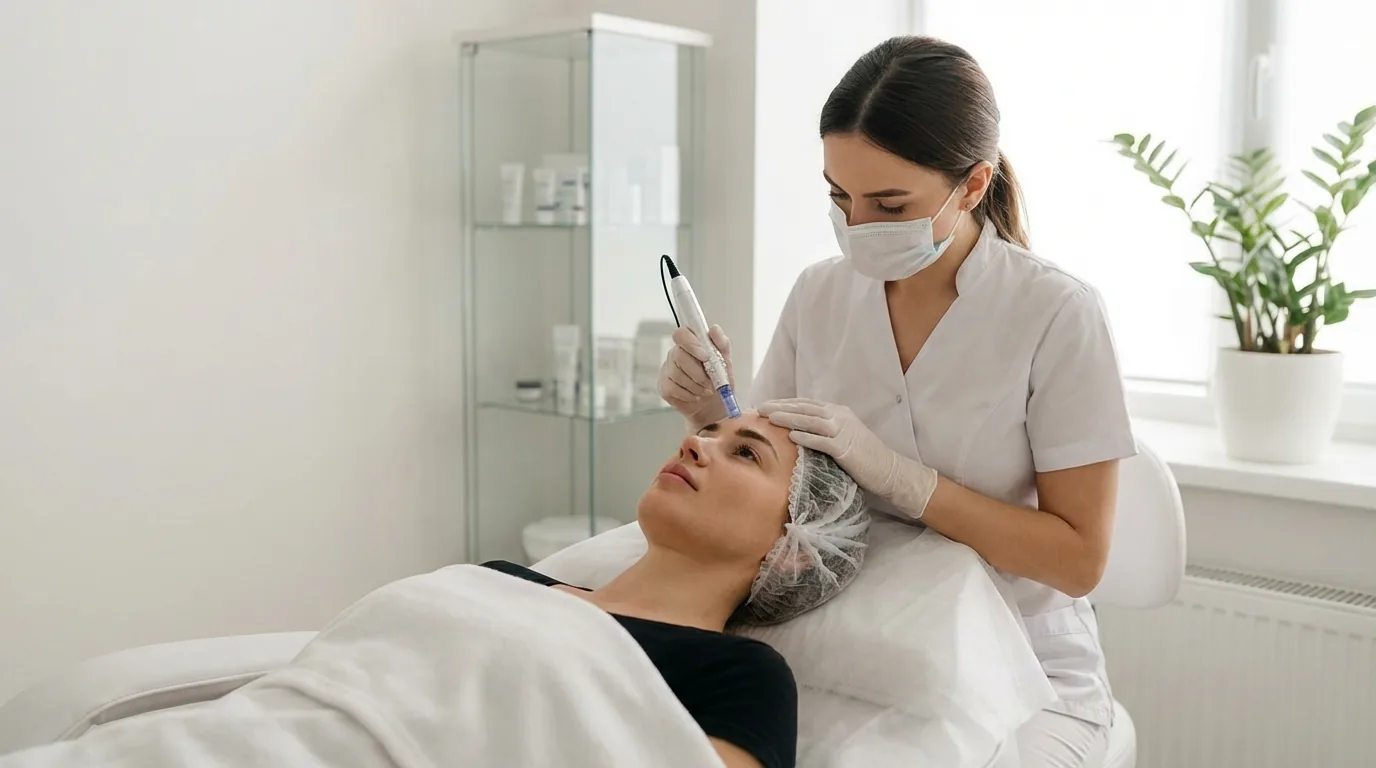
Microneedling is one of the most evidence-backed in-office treatments for both red and white stretch marks. By creating thousands of controlled micro-injuries in the dermis, it triggers a wound-healing cascade that increases collagen and elastin production over the following weeks. A series of 4-6 sessions typically produces 40-60% improvement in stretch mark appearance, with continued improvement for several months after the final session.
Fractional laser treatments — including non-ablative fractional (Fraxel) and ablative fractional (CO2, erbium) — work by similar mechanisms but with more controlled energy delivery. Pulsed dye laser specifically targets the vascular component of red stretch marks and is highly effective for early striae rubrae. Ablative fractional laser produces the most dramatic results for mature white stretch marks but requires significant downtime and carries risk of pigmentary change in darker skin types.
Radiofrequency microneedling (RF microneedling) combines mechanical needling with radiofrequency heat delivered into the dermis, producing more substantial collagen remodeling than microneedling alone. Studies show particularly good results for stretch marks resistant to other treatments. Expect 4-6 sessions spaced one month apart, with results continuing to improve for 6 months after the final treatment.
Realistic Expectations and Prevention
Even the best treatments produce improvement, not elimination. A 50% reduction in stretch mark visibility from a course of fractional laser is considered an excellent outcome. They will rarely become invisible — though they can become genuinely difficult to see in normal lighting, which is the practical goal of treatment.
Prevention strategies have surprisingly weak evidence behind them. Daily moisturization during pregnancy doesn't reliably prevent stretch marks in well-controlled studies, despite widespread cultural belief. The strongest preventive interventions are those that control the rate of stretching itself: gradual weight gain, careful management of bodybuilding pace, and limiting unnecessary corticosteroid use.
Perhaps most importantly: stretch marks are extraordinarily common, medically harmless, and not a moral failing. Treatment can reduce their visibility, but accepting them as a normal feature of bodies that grow, change, and carry life is also a perfectly reasonable choice. The decision to treat or not treat should be yours alone — driven by what bothers you, not by external pressure.
References
- Hague A, Bayat A. "Therapeutic targets in the management of striae distensae: a systematic review." Journal of the American Academy of Dermatology. 2017;77(3):559-568.
- Ud-Din S, McGeorge D, Bayat A. "Topical management of striae distensae (stretch marks): prevention and therapy." Journal of the European Academy of Dermatology and Venereology. 2016;30(2):211-222.
- Aldahan AS, et al. "Laser and light treatments for striae distensae: A comprehensive review." American Journal of Clinical Dermatology. 2016;17(3):239-256.